Garbage Disposal Air Switch & Under-Sink Wiring in Austin, TX
The disposal itself is only half the job.
The other half lives in the details most installers rush: the switch that turns it on, the outlet that powers it, the dishwasher line that drains through it, and the flange seal that keeps it all dry.
This page covers the electrical and plumbing prep work we do across Austin every week. Air switch and countertop button installation for stone counters where a wall switch is impractical.
Under-sink GFCI outlet wiring that brings old hardwired setups up to code. Dishwasher drain line hookups done with proper high loops so dirty water never flows backward.
And sink flange replacement and resealing, the unglamorous fix behind most mysterious under-sink puddles.
Whether you are adding a disposal where none existed, upgrading a kitchen in Westlake, or fixing a leak in a 1960s Brentwood ranch, this is the work that makes the install safe, quiet, and dry for the next decade.
Every job is quoted clear and tested with a meter before we leave.
Air Switch and Countertop Button Installation
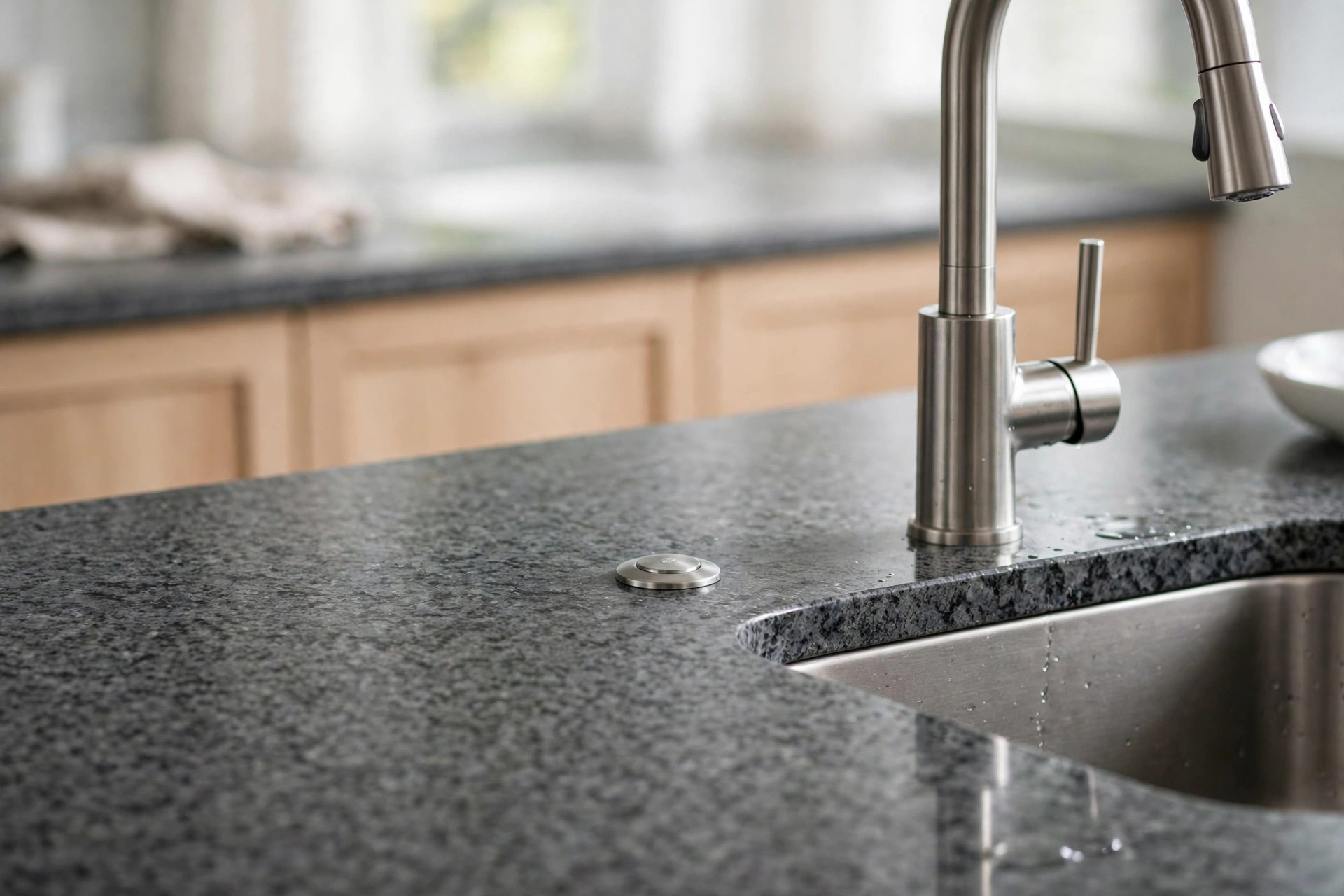
An air switch is a push button mounted in the sink deck or countertop that turns the disposal on with a puff of air, no electricity at the button itself.
It is the standard choice for granite, quartz, and butcher block counters where cutting in a wall switch is impractical or ugly, and it is a favorite in Austin kitchen remodels from Mueller to Circle C.
Installation starts with choosing the button location, usually a spare sink-deck hole or a small drilled opening in the stone.
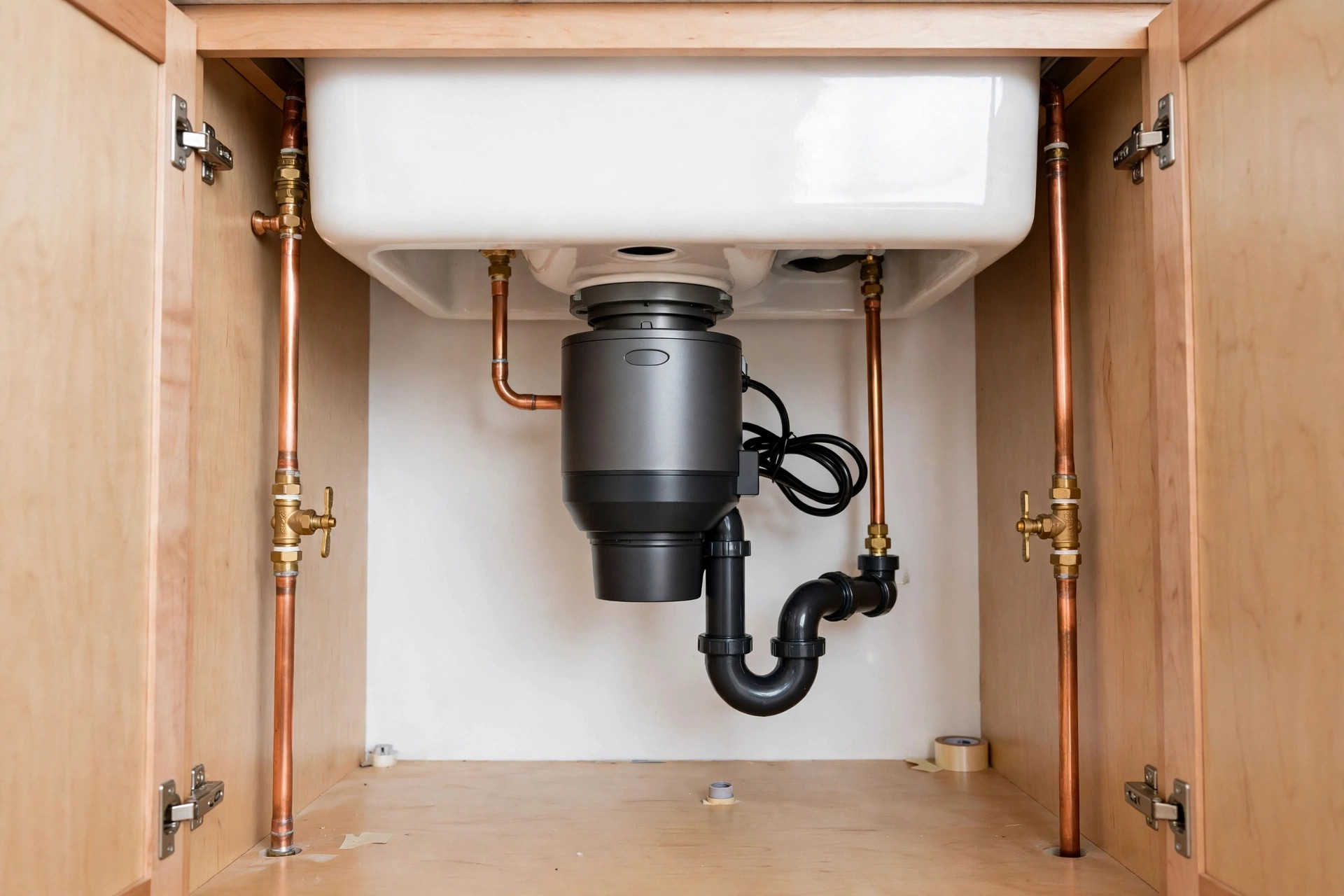
The button connects via a thin air tube to a control box under the sink, which switches the disposal's power.
Because only air travels to the button, your wet hands never touch line voltage, which is why many families prefer it over a wall switch.
We mount the control box high in the cabinet away from potential drips, route the air tube without kinks, and test the on-off action repeatedly.
Air switches also solve the island-sink problem elegantly: no wall nearby, no problem.
The button comes in finishes to match your faucet, and the whole addition typically takes under an hour when paired with a disposal install. Air switch buttons need occasional cleaning, since kitchen grease can make them sticky over time.
A quick wipe with a degreasing cloth keeps the action crisp. If a button ever stops responding, the air tube has usually slipped off the control box, a two-minute fix we will show you how to check.
Under-Sink GFCI Outlet Wiring
Many older Austin homes have disposals that were hardwired directly, with wire nuts connecting the unit to house wiring inside the cabinet. It worked in 1975, but it is not how we do it today.
We convert hardwired connections to a proper GFCI-protected outlet with a corded plug on the disposal, which is safer, cleaner, and makes every future replacement dramatically simpler.
The work starts at the breaker panel: power off, verified dead with a meter. We mount a GFCI outlet box high in the cabinet, away from the trap and any potential drip path, and wire it to code with proper strain relief.
The disposal gets an appliance cord with a grounded plug. We test the GFCI trip function, confirm the disposal runs, and label the breaker clearly.
This upgrade is often required during a from-scratch installation, since a new disposal needs a code-compliant power source, and it is smart preventive work during any replacement in an older home.
Kitchens in Hyde Park, Brentwood, and East Austin see this the most, but we find hardwired units all over the city.
One visit, clear answers, and your under-sink electrical is done right for decades. We test the GFCI monthly-test button with you before leaving, so you know what normal looks like.
If the outlet ever trips and will not reset, that is the disposal or the circuit asking for attention, and it is worth a service call rather than repeated resetting.
Dishwasher Drain Line Hookup
The dishwasher drains through the garbage disposal in most Austin kitchens, and this little connection causes an outsized share of service calls.
Every new disposal ships with the dishwasher inlet sealed by a knockout plug, a plastic disc inside the inlet nipple.
If the installer connects the dishwasher hose without knocking that plug out, the dishwasher cannot drain, and the homeowner assumes the brand-new dishwasher is broken. We see this weekly.
A proper hookup has three parts. First, the knockout plug gets removed and fished out of the chamber before the unit goes in.
Second, the dishwasher drain hose connects to the inlet nipple with a proper clamp, sized to the hose.
Third, and most skipped, the hose gets routed in a high loop, secured up high under the countertop, so sink water cannot flow backward into the dishwasher.
Some setups use an air gap device on the sink deck instead, which we install when the configuration calls for it.
During every installation and replacement, we run the dishwasher through a drain cycle and watch the connection for seepage.
It takes five extra minutes and prevents the most common post-install callback in the business. When we replace a disposal, we also inspect the dishwasher hose itself.
A cracked or brittle hose will fail soon regardless of the new hookup, and replacing it during the same visit costs far less than a second service call after it splits and floods the cabinet.
Sink Flange Replacement and Resealing
The sink flange is the metal ring visible in the drain opening, and its seal is what keeps dishwater from running down the outside of the disposal and into your cabinet.
When that seal fails, you get the classic mystery puddle: water appears under the sink with no obvious source.
Old plumber's putty dries and cracks, mounting rings loosen over years of vibration, and in Austin's hard water the flange itself can rust through, especially on original builder-grade installs from the 90s and 2000s.
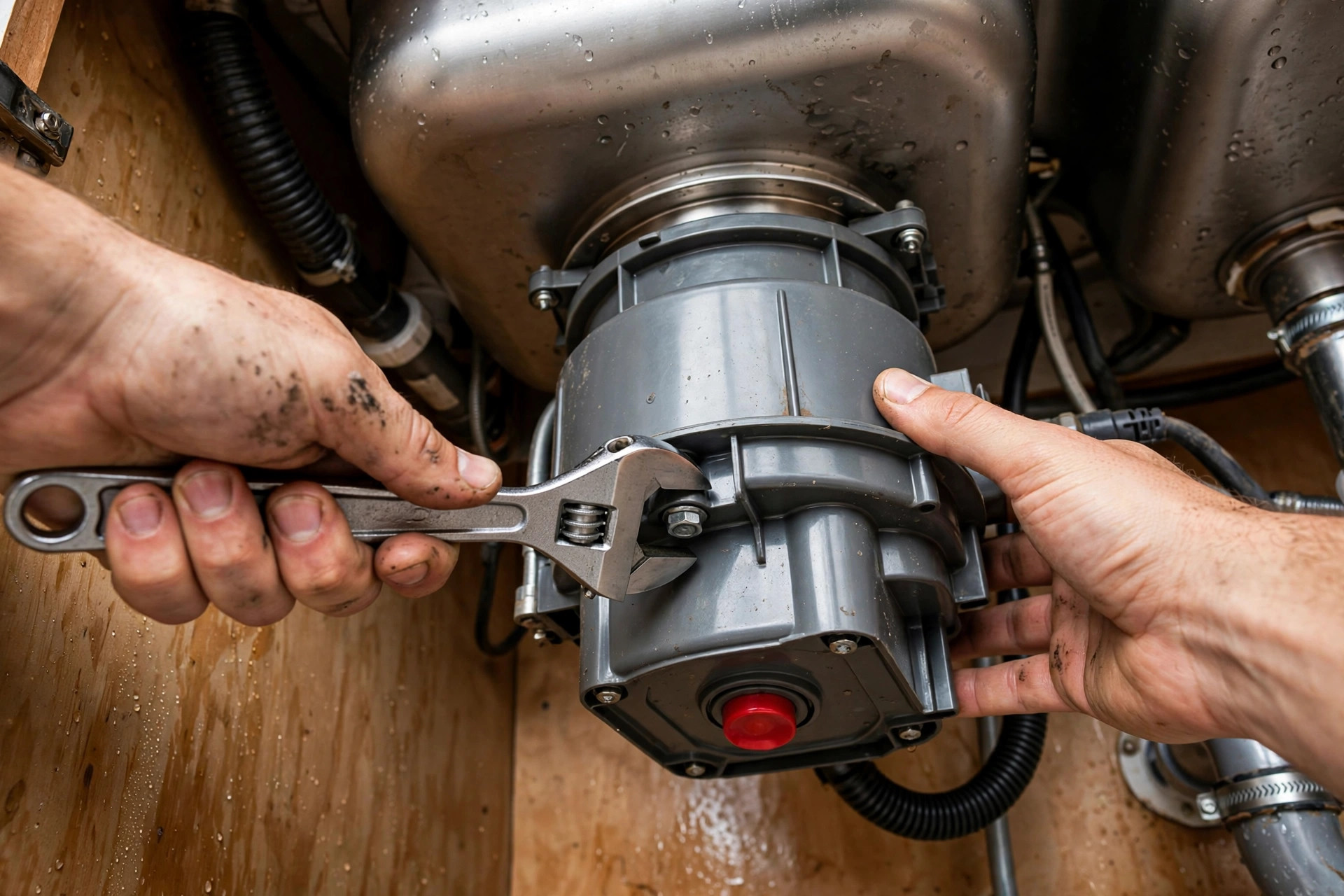
Resealing is straightforward but fiddly: the old unit comes off, the mounting assembly disassembles, every trace of old putty gets scraped clean, and a fresh rope of putty goes under a new or cleaned flange.
The mounting ring tightens evenly, the excess putty squeezes out and gets trimmed, and the unit remounts.
We replace rather than reuse any flange showing rust pits or a warped mounting surface, because a compromised flange will leak again within months.
A proper reseal takes about thirty minutes during a replacement visit and adds years to the install.
If your cabinet floor shows water staining around the disposal, the flange is the first place we look. Stainless steel flanges resist Austin's hard water far better than the standard metal ones, and we recommend them for every replacement.
The upgrade cost is small, and it eliminates the most common reason flanges fail prematurely in Central Texas.
Electrical Safety and Code Notes for Austin Homes
Under-sink electrical deserves respect: it is line voltage in a damp cabinet inches from water lines. A few code and safety notes apply to nearly every Austin home we visit.
Disposals should be on a GFCI-protected circuit, and the outlet belongs high in the cabinet, never sitting in the drip zone beneath the trap.
Cords need proper strain relief where they enter the disposal housing, and wire nuts, where they still exist in hardwired setups, must be in an enclosed box, not dangling free.
The air switch control box also mounts high and dry. On the plumbing side, the dishwasher high loop or air gap is not optional trim, it is backflow protection.
We test every circuit with a meter before touching a wire and again after, and we trip-test every GFCI we install.
None of this is glamorous, and none of it shows in a photo of your new kitchen, but it is the difference between an install that is safe for ten years and one that is a hazard waiting for a leak.
When we quote wiring work, the price covers doing all of it to code, not just the visible parts. If your home still has a fuse box rather than a breaker panel, mention it when you call.
Disposal wiring on fused circuits needs extra care, and we may recommend a panel evaluation before adding new loads. Safety first, always.
Garbage Disposal Air Switch & Wiring FAQs
Common questions about garbage disposal air switch & wiring in Austin.
What is a garbage disposal air switch, and do I need one?
An air switch is a countertop push button that runs the disposal with a puff of air, so no electricity reaches the button. You need one if there is no wall switch nearby, such as with island sinks, or if you prefer not to touch a wall switch with wet hands.
Can you add an outlet under my sink for the disposal?
Yes. We add GFCI-protected outlets under sinks and convert old hardwired connections to corded plugs. It is standard work during a from-scratch install and a smart upgrade during any replacement in an older home. Most outlet additions finish in under an hour as part of the installation visit.
Why won't my new dishwasher drain after a disposal install?
Almost always the knockout plug. New disposals ship with the dishwasher inlet sealed, and if the installer forgets to knock it out, the dishwasher cannot drain. We remove it on every install and test the dishwasher drain cycle before leaving.
How do I know if my sink flange needs replacing?
Water staining on the cabinet floor around the disposal, rust visible on the flange ring in the sink, or a leak at the top of the unit all point to flange failure. We inspect it on every visit and replace rather than reuse a compromised flange.
Related Garbage Disposal Services
More ways we keep Austin kitchens running.
More garbage disposal services
Garbage Disposal Installation
New installs, remodels, continuous and batch feed units, compact and high-HP upgrades.
Garbage Disposal Repair
Jam removal, leak repair, reset and electrical troubleshooting, odor elimination.
Garbage Disposal Replacement
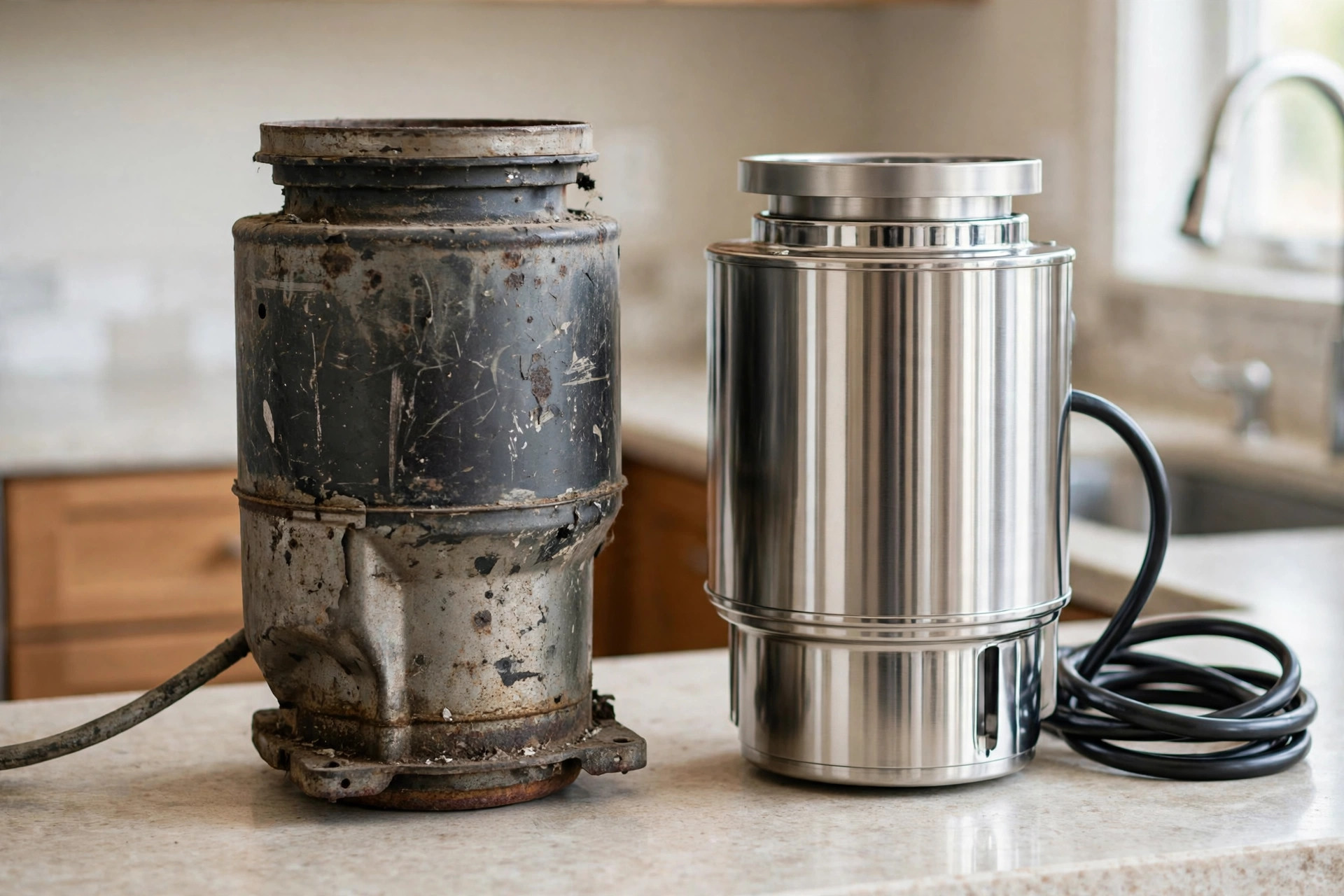
Same-day swap-outs for dead or failing units, right-sized horsepower, haul-away included.
Ready for Garbage Disposal Air Switch & Under-Sink Wiring in Austin, TX?
Call now for garbage disposal air switch & wiring in Austin. Same-day appointments, clear quote before we start.
Get in Touch with Us
Tell us what you need. We typically respond within the hour.
Garbage Disposal Installation Austin
-
Phone
(512) 555-0148 -
Address
Austin, TX, USA
-
Hours
Mon-Sat: 7am to 7pm