
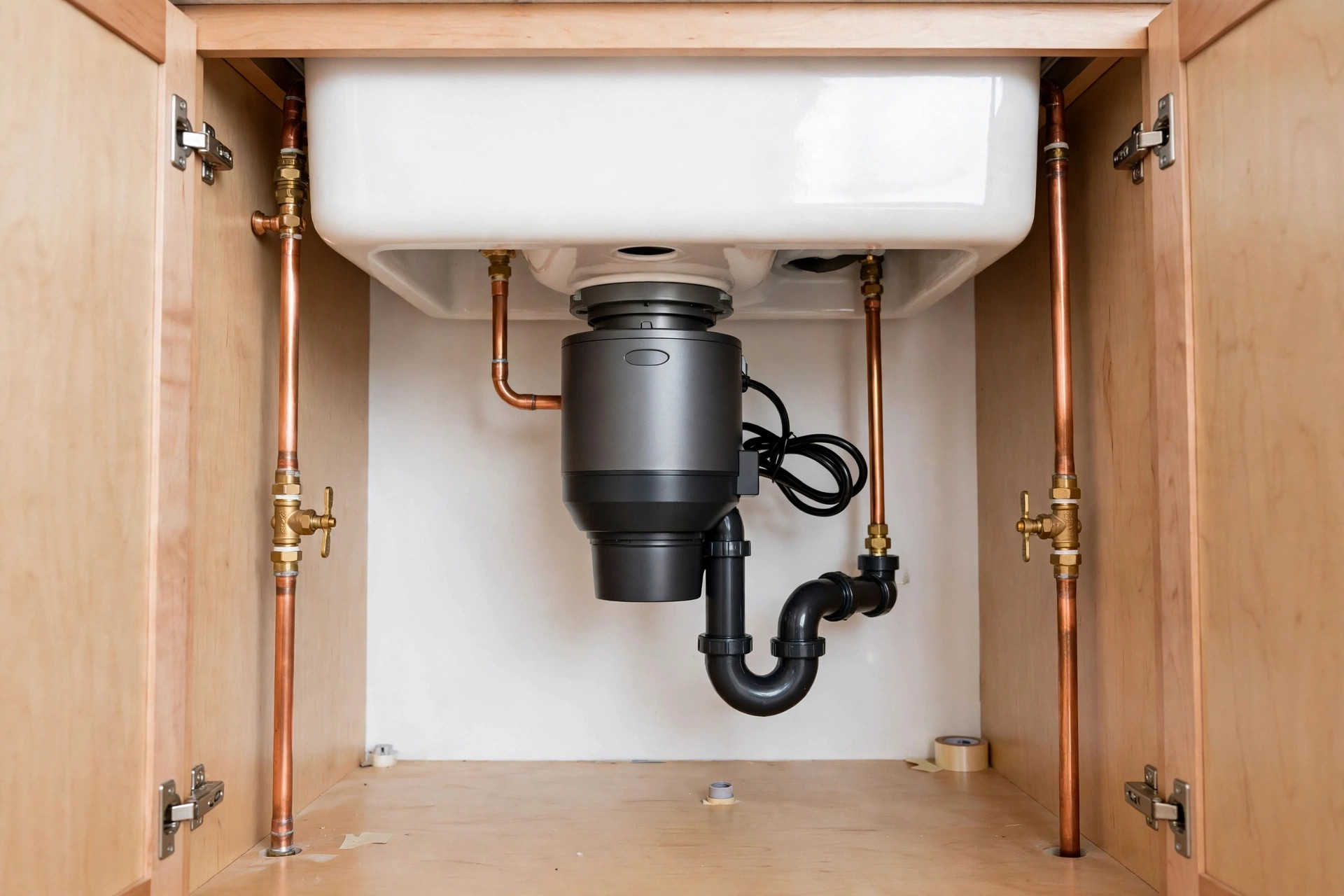
Can You Use a Garbage Disposal With a Septic Tank?
Septic system owners get conflicting advice about garbage disposals, usually in the form of a firm no from one neighbor and a shrug from another.
The short answer is yes, you can use a disposal with a septic tank, but it changes the rules: everything you grind ends up in the tank, and the tank has a finite appetite.
Used thoughtlessly, a disposal shortens the time between pump-outs and loads up the drain field. Used sensibly, with the right model and habits, it coexists fine with septic.
This guide gives you the honest middle ground: why septic owners worry, which models actually help, and the habits that protect your system.
Why Septic Owners Worry (and Whether They Should)
The worry is legitimate in principle. A septic tank works by letting solids settle while bacteria break down waste, and everything a disposal grinds becomes additional solid load the tank must handle.
More solids mean the tank fills faster, the drain field works harder, and pump-outs come sooner.
But perspective matters: a household that scrapes plates into the trash and grinds only small scraps adds a modest load, while a household that treats the disposal as a trash can for full plates adds a serious one.
The disposal is not uniquely dangerous to septic; it is just a convenient way to add solids fast if you are careless. Most septic problems blamed on disposals are really problems of volume and habit.
A sensibly used disposal on a properly sized, well-maintained tank is a non-issue, which is why blanket bans are overkill but blanket permission is naive.
When in doubt, ask your septic pumper what they see in tanks with disposals, since they have the ground-level view of which habits cause real problems.
Septic-Assist Models: What They Actually Do
Several manufacturers sell disposals marketed for septic systems, and it is worth knowing what you are actually buying.
The meaningful feature is finer grinding: multi-stage grind systems reduce food to smaller particles, which settle and break down more readily in the tank than coarse chunks.
Some models add an enzyme or treatment cartridge that meters a bacterial supplement into the drain with each use, intended to support the tank's biology.
The honest assessment: finer grinding genuinely helps, while the enzyme cartridges are a mild bonus, not a transformation. No disposal, however marketed, lets you grind unlimited food into a septic system safely.
If you are buying new for a septic home, choose a 3/4 HP multi-stage unit for the finer grind, and treat any septic-assist cartridge as a nice extra rather than the reason to buy.
The habits in the next section matter far more than the label on the box.
Habits That Protect Your Tank
These five habits are the real septic-disposal manual. First, scrape plates into the trash or compost before rinsing; the disposal should handle small scraps and rinse water, not full meals.
Second, never grind grease or oil, which congeal in the tank and the drain field, the most expensive parts of the system to rehabilitate.
Third, keep volumes small per use and run plenty of cold water, which carries particles through instead of letting them settle in the pipes.
Fourth, go easy on fibrous and starchy foods, which resist breakdown and add disproportionate solids. Fifth, space out heavy grinding rather than doing it all after one big dinner party.
None of this is onerous, and it is the same advice that protects city sewer lines too.
The septic difference is simply that there is no municipal treatment plant downstream to forgive excess, so the margin for carelessness is thinner.
Teach everyone in the household the same rules, since one person treating the disposal as a trash can can undo everyone else's careful habits.
Pumping Schedule With a Disposal
A disposal user should expect to pump more often than an identical household without one. How much more depends on the habits above, but planning on the shorter end of your pumper's recommended interval is the safe play.
Watch for the early warnings that the tank is filling faster than expected: slow drains throughout the house, gurgling sounds, sewage odors near the tank or drain field, and unusually lush grass over the drain field.
Do not wait for a backup to schedule pumping; a full tank pushing solids into the drain field is how expensive field damage happens.
When the pumper comes, mention that you use a disposal, since it helps them assess sludge levels accurately.
Keep a simple log of pump dates, because memory is unreliable and the interval trend tells you whether your habits are working. A stable interval means your routine is fine.
If your interval starts shrinking year over year, that trend is worth discussing with your septic professional before it becomes a drain field problem.
When a Disposal Is a Bad Idea for Septic
There are situations where skipping the disposal is the wiser call. An undersized or aging tank that already needs frequent pumping has no spare capacity for ground food waste.
A household that has already had drain field trouble should not add load to a struggling system.
Very large households that cook heavily will generate more ground waste than a standard residential tank handles gracefully.
And if nobody in the house will follow the habits above, honesty beats optimism: a disposal used as a trash can will punish a septic system.
In these cases, a good sink strainer and a compost bin serve the kitchen better. For everyone else on septic, a sensibly used disposal is perfectly workable.
A frank conversation with your septic professional about your specific tank size and household habits beats any generic advice, including this guide.
If you are on septic and choosing a new unit, our garbage disposal installation service in Austin can help you pick a right-sized model and set it up properly from day one.
Related Garbage Disposal Services
Need a hand? These are the jobs we do every day.
More garbage disposal services
Garbage Disposal Installation
New installs, remodels, continuous and batch feed units, compact and high-HP upgrades.
Garbage Disposal Repair
Jam removal, leak repair, reset and electrical troubleshooting, odor elimination.
Garbage Disposal Replacement
Same-day swap-outs for dead or failing units, right-sized horsepower, haul-away included.
Disposal acting up right now?
Call for same-day garbage disposal repair in Austin. clear answers before we start.
Get in Touch with Us
Tell us what you need. We typically respond within the hour.
Garbage Disposal Installation Austin
-
Phone
(512) 555-0148 -
Address
Austin, TX, USA
-
Hours
Mon-Sat: 7am to 7pm