Garbage Disposal Dishwasher Hookup Guide
In most kitchens the dishwasher drains through the garbage disposal, a simple connection that causes an outsized share of headaches.
It is only a drain hose clamped to a nipple on the side of the unit, but one forgotten step during installation leaves the dishwasher unable to drain at all, and one bad routing choice sends dirty water back into your clean dishes.
Whether you are installing a new disposal, replacing a dishwasher, or troubleshooting a backup, this guide covers the connection the way a plumber does it: the knockout plug everyone forgets,
the high loop that prevents backflow, and how to test the whole thing before you call it done.
How the Dishwasher-Disposal Connection Works
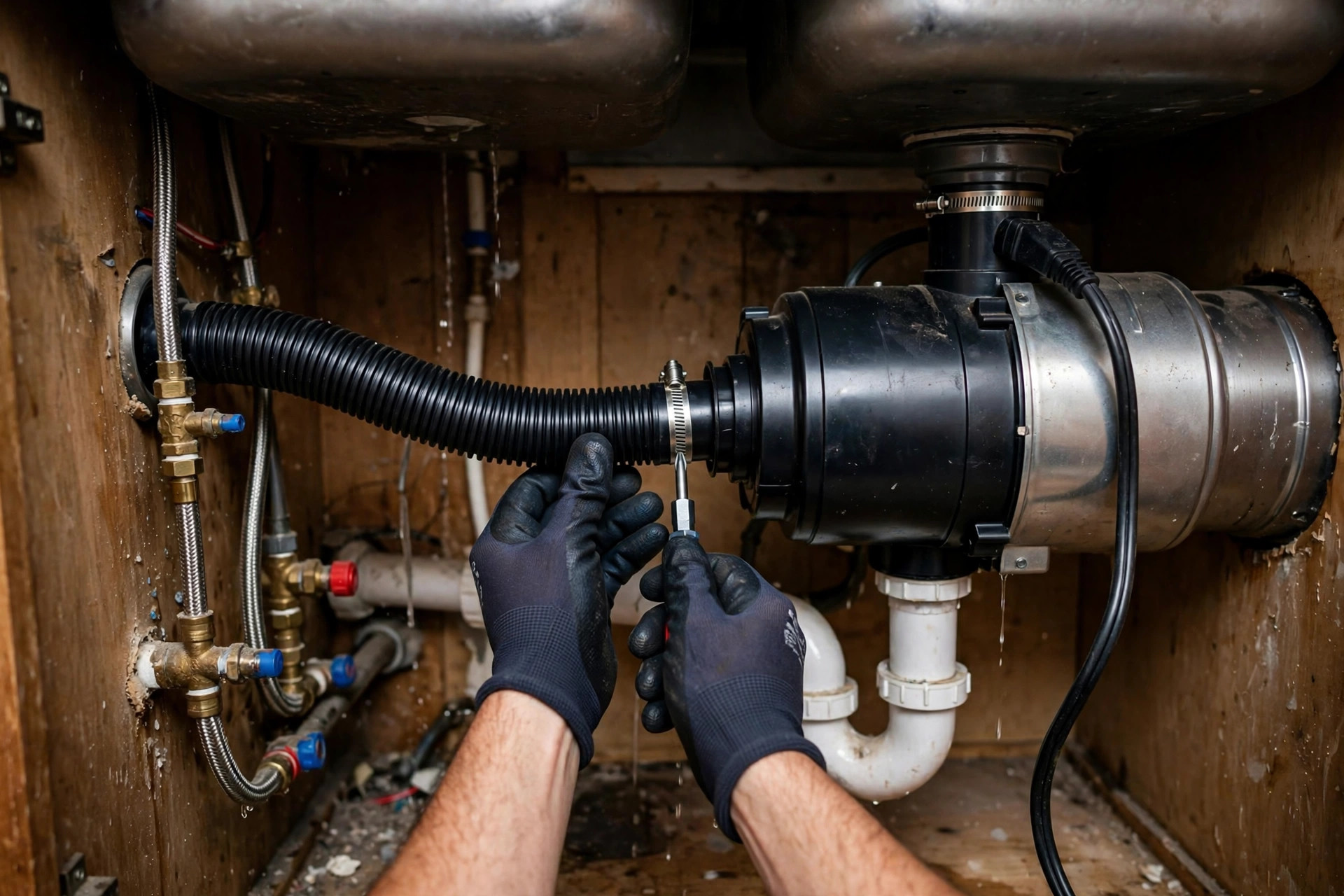
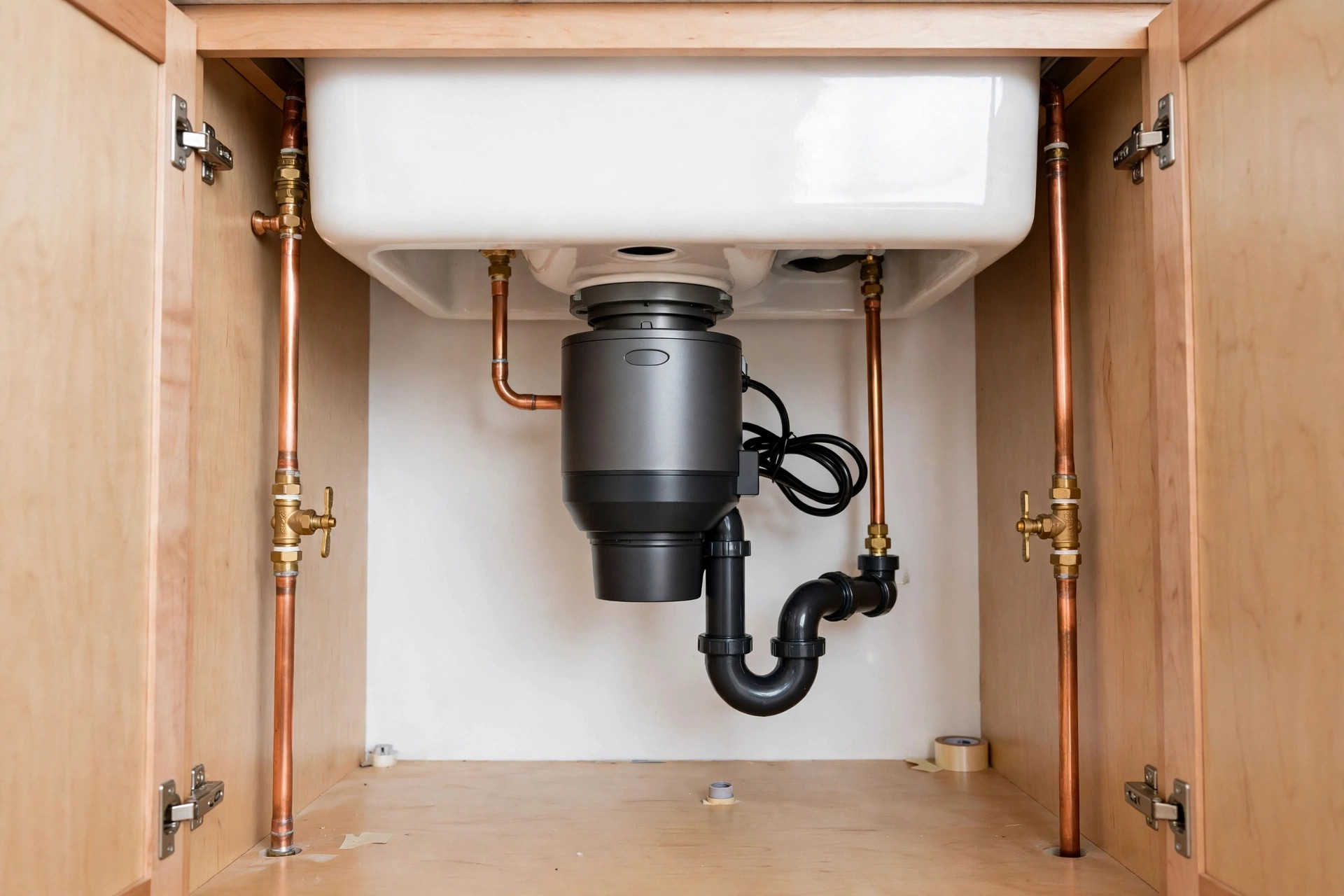
The setup is simple once you see it. The dishwasher pumps its dirty water out through a flexible drain hose, and that hose connects to a small inlet nipple on the side of the garbage disposal.
The water passes through the disposal's upper chamber and out the discharge tube into the sink drain.
The disposal does not grind anything from the dishwasher; it is just a convenient drain path that shares the sink's plumbing.
The hose connects with a simple hose clamp, and the whole job takes minutes once the disposal is mounted.
Because the dishwasher depends on this path to empty, anything wrong with the connection, a blocked nipple, a kinked hose, a clogged disposal, shows up immediately as a dishwasher that will not drain or a sink that fills with dirty water.
Understanding this chain is what makes the troubleshooting later in this guide make sense.
If your kitchen was remodeled or the disposal was replaced recently, this connection is the first thing to verify whenever dishwasher drainage problems appear.
The Knockout Plug: The Step Everyone Forgets
Here is the number one cause of dishwasher drainage failures after a new disposal install.
Disposals ship with the dishwasher inlet sealed by a small plastic knockout plug inside the nipple, because not every installation connects a dishwasher. If you are connecting one, that plug must be removed first.
The method: with the disposal unmounted or at least accessible, place a screwdriver against the plug through the nipple opening and tap it firmly with a hammer until it knocks free into the grind chamber, then tip the unit and shake the loose plug out.
Skip this step and the dishwasher hose connects to a sealed wall: the dishwasher pumps against a dead end, water backs up, and the dishwasher throws a drainage error. We see this constantly on DIY installs.
If your brand-new disposal install left the dishwasher unable to drain, check the knockout plug before you check anything else.
High Loop vs Air Gap
With the plug knocked out, the hose routing matters. Drain water must not be able to flow backward from the disposal into the dishwasher, which would contaminate clean dishes.
The standard protection is a high loop: the drain hose rises up and is secured to the underside of the countertop, well above the disposal inlet, before dropping down to connect.
Gravity then keeps disposal water from climbing into the dishwasher. The alternative is an air gap, a small fixture mounted on the sink deck that breaks the hose path with an air break.
Air gaps are the strictest protection and are required by code in some jurisdictions.
In practice, most Austin-area installs pass with a proper high loop, but expectations vary by inspector and by municipality, so a local plumber will know what is accepted on your street.
Either way, never let the hose sag below the inlet: a low loop is an invitation for backflow.
Dishwasher Backing Up Into the Sink?
Dirty water appearing in the sink when the dishwasher runs means the shared drain path is restricted somewhere. Work backward from the symptom.
First, the knockout plug: if this started right after a new disposal install, the plug is still in.
Second, a clogged disposal or discharge tube: run the disposal with water flowing and see if drainage improves, and check the discharge pipe for packed food.
Third, a kinked or crushed drain hose behind the dishwasher, common after the appliance was pushed back into place. Fourth, a blockage further down in the P-trap or wall drain, which backs up both fixtures.
Diagnose in that order, because each step is cheaper than the next.
One more check: make sure the disposal itself drains freely into the sink drain, since a disposal packed with a forgotten jam will block the dishwasher too. Clear the disposal first, then retest the dishwasher.
Take photos of the hose routing before you disconnect anything, so you can put it all back exactly as it was if the simple fixes do not solve it.
Electrical Notes: Shared Circuits
Dishwashers and disposals commonly share a single kitchen circuit, and that is usually fine, until it is not.
If the breaker trips when both run together, the circuit is overloaded and the lasting fix is a dedicated circuit or separating the loads, not a bigger breaker.
Also note that both appliances need GFCI protection under current code in most kitchen setups, which is worth verifying during any install.
If you are adding a disposal where none existed, plan the electrical at the same time as the plumbing: a corded plug into a GFCI outlet under the sink, or an air switch on the countertop that removes the wall switch from the equation entirely.
If your kitchen predates GFCI requirements, a disposal install is a sensible time to bring the under-sink outlet up to modern protection standards.
And if you would rather not crawl under the sink yourself, our garbage disposal installation service in Austin handles the full hookup, knockout plug, hose routing, and electrical, tested before we leave.
Related Garbage Disposal Services
Need a hand? These are the jobs we do every day.
More garbage disposal services
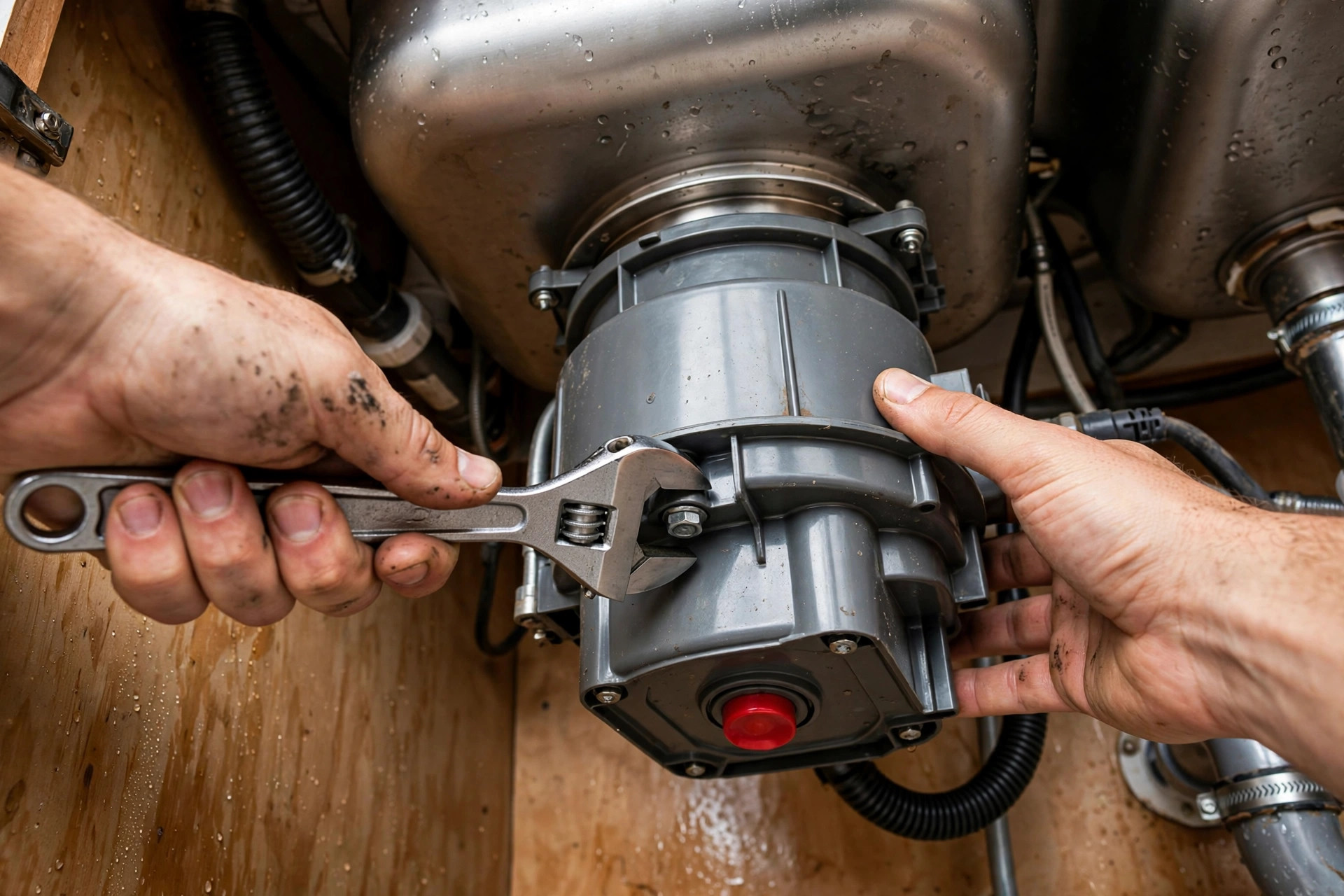
Garbage Disposal Installation
New installs, remodels, continuous and batch feed units, compact and high-HP upgrades.
Garbage Disposal Repair
Jam removal, leak repair, reset and electrical troubleshooting, odor elimination.
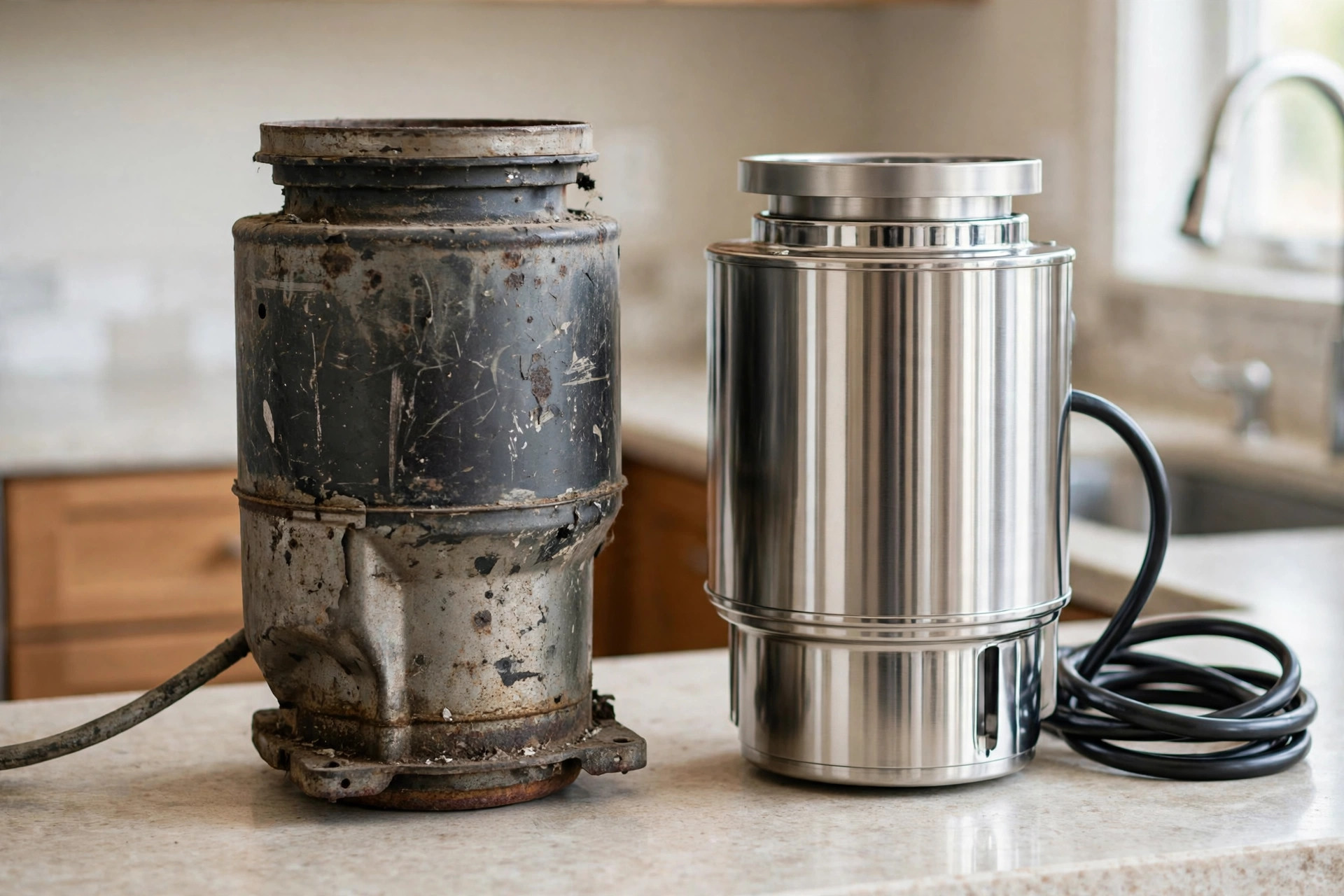
Garbage Disposal Replacement
Same-day swap-outs for dead or failing units, right-sized horsepower, haul-away included.
Disposal acting up right now?
Call for same-day garbage disposal repair in Austin. clear answers before we start.
Get in Touch with Us
Tell us what you need. We typically respond within the hour.
Garbage Disposal Installation Austin
-
Phone
(512) 555-0148 -
Address
Austin, TX, USA
-
Hours
Mon-Sat: 7am to 7pm